


Why your spending habits might be tied to something deeper.
Let’s rewind to Psych 101 for a second — remember feedback loops? There’s a positive feedback loop between your finances and your mental health. If you reinforce the initial stimulus—like poor financial habits—it can quickly spiral into something bigger: more stress, more anxiety, disrupted sleep, and eventually, even less money in your accounts. It’s a cycle that feeds itself until it feels overwhelming.
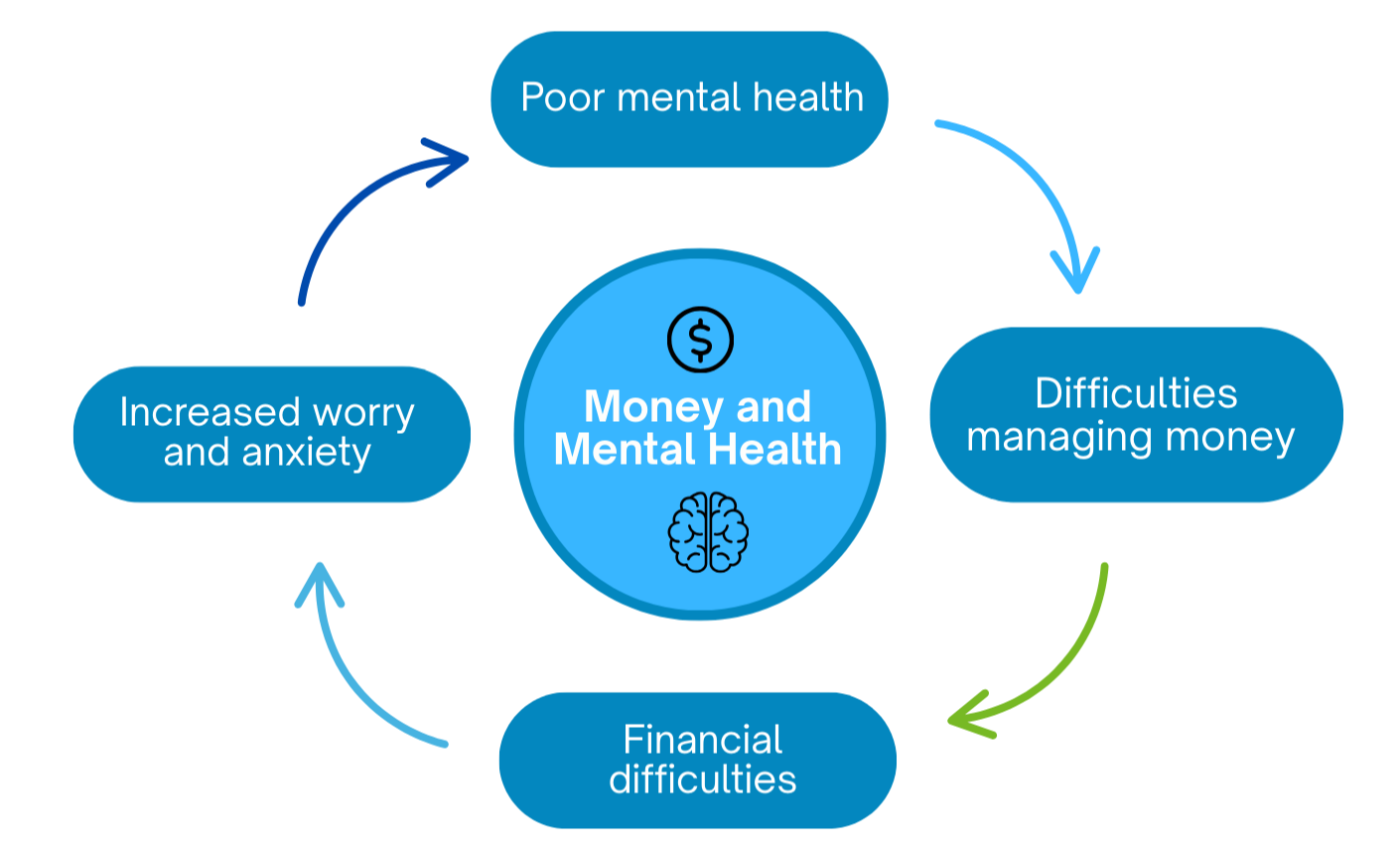
But the good news? The same loop can work in reverse. When your finances are in order, your confidence rises. You sleep better. You make clearer decisions. You spend less impulsively.
This Mental Health Awareness Month, we’re breaking down how your finances and mental health are connected, when the cycle tends to take hold, and a few small steps that can help shift it in the right direction.
Why There’s A Connection Between Mental Health and Your Finances
It starts with a simple chemical reaction. Think about that little boost you get when you buy a six-dollar latte or finally check out on that new flat-screen TV. That’s your brain releasing dopamine and endorphins — the feel-good chemicals we’re naturally wired to crave.
Sure, there are other ways to get that boost, but shopping is one of the few that directly touch your bank account. And when life feels uncertain or out of control, spending can feel like a quick way to regain a sense of comfort or control, even if just for a moment.
Today’s one-click world only makes it easier to chase that high, whether it’s tapping your phone at checkout or hitting “Place Order” online. This feel-good cycle is often referred to as retail therapy, and while it’s common, it can become problematic when it turns into a go-to coping mechanism.
The challenge is, when emotional spending becomes a pattern, it can create a cycle. That temporary high is followed by financial stress, which only adds more pressure — and the loop continues.
This is where your mental health and money decisions start to overlap. How you feel impacts how you spend, save, and plan. And your financial situation plays a big role in how you feel day to day.
When Mental Health Impacts Financial Decisions
We see this all the time and chances are, you or someone you know has experienced it.
When mental health struggles like anxiety or depression set in, they can lead to avoidance behaviors: ignoring bills, skipping budget check-ins, or spending impulsively to feel better in the moment. That quick hit of instant gratification might help temporarily, but over time, it can lead to even more financial stress.
According to a study by the Meadows Mental Health Policy Institute, more than 70% of people said they spend more than usual when their mental health declines, and just as many said they struggle to make financial decisions during those periods.
When your mental health is low, your financial behaviors tend to follow.
When Financial Stress Fuels Mental Health Struggles
It’s not just that mental health affects how we handle money — the reverse is true, too. Carrying a lot of debt, not earning enough, or living paycheck to paycheck can take a serious toll on your mental well-being.
In fact, research shows the link is strong: a study from the University of Alabama at Birmingham found that people with higher levels of unsecured debt (like credit cards or medical bills) had significantly higher odds of experiencing anxiety, depression, and even physical health issues like high blood pressure.
Another recent study published in Scientific Reports found that adults with less than $5,000 in financial assets were more than twice as likely to report symptoms of depression and anxiety compared to those with more savings.
Here’s How to Reverse the Loop
These small shifts won’t overhaul your finances overnight but they will help you break the cycle and build momentum in the right direction.
Do a “Money Mood Check” Before You Buy
Before making a purchase, pause and ask: What am I feeling right now — and what do I hope this will fix? Naming your emotion, whether it's stress, boredom, or burnout, can help you better understand the “why” behind your spending and give you space to choose a different action if needed.Check One Thing Off Your Mental Money List
Pick one low-effort task that’s been hanging over you — like unsubscribing from a service you barely use, checking your credit score, or deleting a shopping app you always regret using. Not only will you feel satisfaction from having completed a task (hello dopamine), but you will also be helping yourself make smarter moves with your money.Celebrate a Money Win Every Week
Set a quick weekly reminder to note one small win. Maybe you packed lunch instead of eating out, wrote down your expenses for the week, or skipped an unnecessary purchase. Taking a moment to recognize positive actions helps reinforce those habits and makes it easier to keep going.Automate Where You Can
On the days when motivation is low or decision fatigue kicks in, automation can keep you on track. Set up automatic transfers to your high-yield savings account. Turn on autopay on your credit cards and bills if you haven’t already. Check if your card lets you set daily spending limits to curb your purchases.Reframe Financial Planning as Self-care
Just like meal prepping or going to therapy, getting your finances in order is an act of care for future you. All the tips above lead to a mindset shift that helps you build a better relationship with your money and, through that, your mental health.
If you’re thinking you’ve done all you can yourself and it’s time to talk to someone, you’ve come to the right place. Our team is here to help you break the cycle and feel more confident when it comes to your money and the role it plays in your everyday life. You can schedule a quick consultation hereif you'd like to talk it through.