


October is National Financial Planning Month, which makes it a good time to step back and take a look at your financial life — not just your accounts, but the whole picture. Most people don’t wake up thinking, “I need a financial plan.” They just want to know they’re doing the right things with their money and that they’ll be okay down the road.
That’s really what a plan is: a way to bring structure and confidence to the financial decisions you’re already making.
What a Financial Plan Actually Means
It’s about understanding what you’re saving for, how much is enough, and which steps can help you reach your goals more efficiently. Maybe that means optimizing your retirement contributions before year-end, reviewing insurance coverage, updating beneficiaries, or finding opportunities to reduce taxes while there’s still time.
For some, it’s about building momentum. Like finally setting up that Roth IRA, automating savings, or creating a college funding strategy. For others, it’s refining what’s already working with the help of a financial professional.
How a Financial Plan Comes Together
This is a easy way top get started thinking about what you want your financial plan to include:
Step 1: Assess Your Current Financial Picture
Before planning ahead, it’s important to understand where you are today.
Determine your net worth: List all assets and subtract your liabilities.
Track your cash flow: Review income and expenses to identify spending patterns.
Check your credit: Review your report and score to spot opportunities for improvement.
Step 2: Define Clear, Measurable Goals
Set short- and long-term goals that are realistic and aligned with your priorities.
Short-term (1–3 years): Build an emergency fund, reduce debt, or save for a major purchase.
Long-term (5+ years): Plan for retirement, fund education, or work toward financial independence.
Step 3: Address Immediate Priorities
Strengthen your foundation before focusing on growth.
Build an emergency fund covering 3–6 months of expenses.
Pay down high-interest debt to free up cash flow.
Review insurance coverage to ensure your income and assets are protected.
Step 4: Plan for Growth and Protection
Once the basics are in place, focus on strategies that help you grow and preserve your wealth.
Contribute to retirement accounts such as a 401(k) or IRA.
Develop a tax-efficient investment and savings strategy.
Begin estate planning to ensure your assets are managed and distributed according to your wishes.
Step 5: Review and Adjust Regularly
Revisit your plan annually or after major milestones like a career change, marriage, or new home.
Adjust contributions, goals, and risk levels as your circumstances shift.
Step 6: Partner with a Financial Professional
Building a plan is one thing. Keeping it on track is another.
A financial advisor can help you identify blind spots, align your plan with tax and market changes, and hold you accountable to your goals, especially as year-end approaches and new opportunities arise with our 6-Step Approach , which is designed to make the process clear, collaborative, and completely tailored to you.
What It Looks Like If You Don’t Have One
Without a plan, money decisions tend to happen in reaction to life: a new job, an unexpected bill, a market change, or a big purchase you didn’t see coming. You might be making good choices, but without a bigger strategy, it’s hard to know if those choices are actually getting you where you want to go.
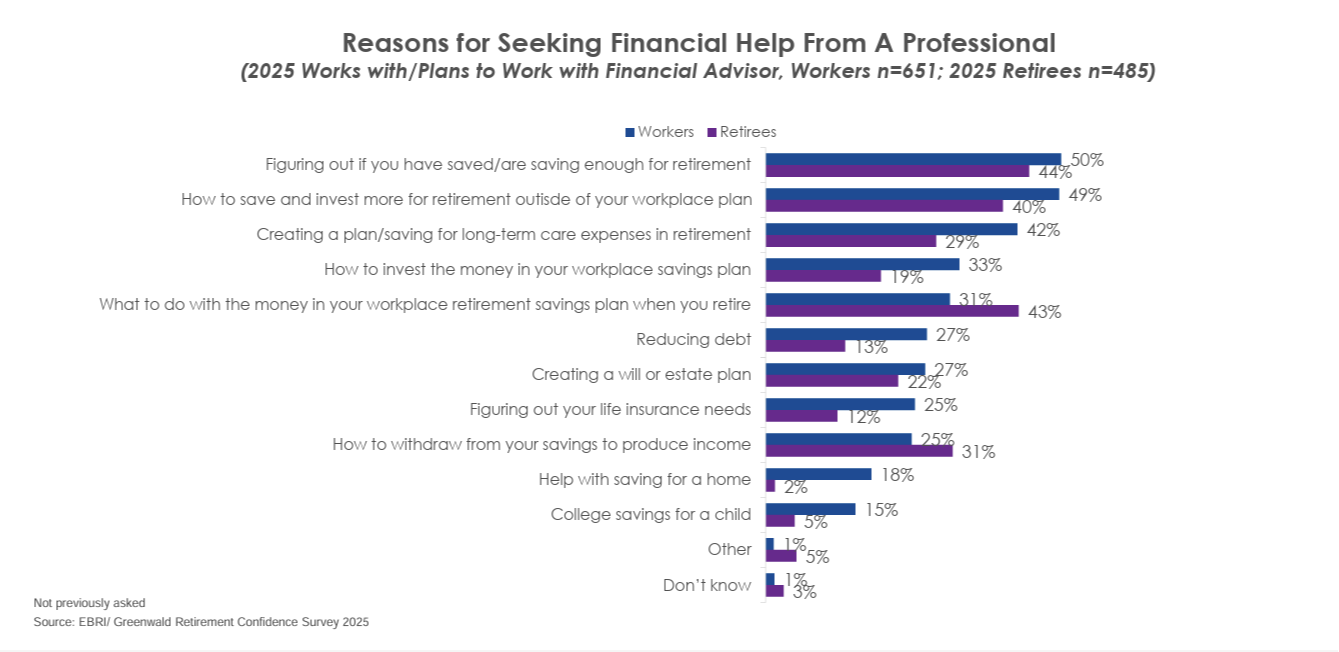
According to the 2025 EBRI/Greenwald Retirement Confidence Survey, about half of workers and nearly as many retirees turn to a financial professional just to figure out if they’ve saved enough for retirement. Others are looking for guidance on how to invest, what to do with workplace savings when they retire, or how to plan for long-term care. The common thread is the same — people want clarity and confidence in their financial decisions.
What If You Already Have a Plan?
Even if you already have a financial plan, it’s worth revisiting quarterly. Life doesn’t stay the same, and neither should your plan. Maybe your income has changed, your family has grown, or your priorities look a little different than they did a few years ago. Checking in helps make sure your plan still reflects your life today.
Sometimes that review leads to small tweaks — adjusting savings goals, updating insurance coverage, or rebalancing investments. Other times, it’s just confirmation that you’re still on the right track. Either way, it’s worth the peace of mind.
Why Now?
October is a natural checkpoint. It’s close enough to year-end that you can still make adjustments, but not so close that you feel rushed. It’s a good time to ask questions like:
Am I saving enough and saving in the right places?
Have my goals or expenses changed this year?
Do I feel confident about where I stand financially?
Remember: Your financial plan doesn’t need to be perfect, and it doesn’t have to solve everything at once. It’s just a tool to help you stay proactive instead of reactive, and to feel more confident about where you’re headed.
This month, take a moment to check in with yourself, your goals, and your plan (or to finally start one). Because the best financial plans aren’t built overnight; they’re built over time, through honest conversations and small, intentional steps.